Best .22LR Ammo
11th Sep 2026
Best 22LR Ammo: How to Choose the Right .22 LR Load
By Vizard's Guns & Ammo | Updated September 2026
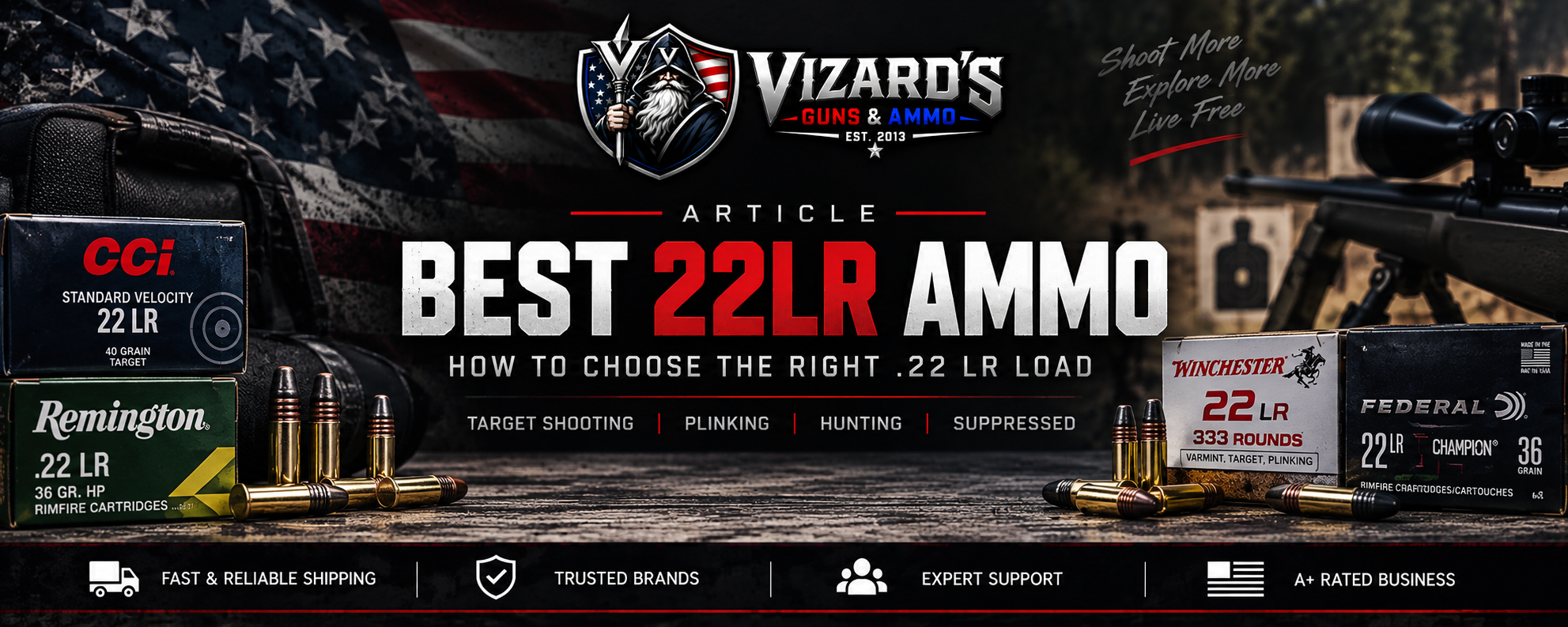
The .22 Long Rifle is one of the most popular and versatile rimfire cartridges available. Shooters use 22LR ammunition for everything from inexpensive range sessions and recreational plinking to target shooting, small-game hunting and suppressed shooting. That versatility also means there isn't one load that can simply be called the best 22LR ammo for every firearm and every purpose.
Choosing the right 22LR ammunition starts with understanding what you want the cartridge to do. A high-velocity hollow point intended for small-game hunting has different priorities than a standard-velocity round selected for target shooting. Someone shooting a suppressed rifle may also place more importance on velocity and sound than a shooter looking for dependable ammunition for a semi-automatic pistol.
The firearm itself matters as well. Rimfire rifles and pistols can sometimes show noticeable preferences for particular ammunition. Two 22LR firearms may produce different accuracy or reliability with the same load, which makes testing several quality options an important part of finding the right ammunition for your individual firearm.
What Makes Good 22LR Ammo?
Good 22LR ammunition should provide consistent ignition, reliable feeding and appropriate accuracy for its intended purpose. Beyond those basics, what qualifies as the best choice depends heavily on how the ammunition will be used.
Several characteristics are worth comparing when shopping for 22LR ammunition:
- Bullet weight
- Bullet construction
- Muzzle velocity
- Standard or high velocity
- Solid or hollow-point bullet
- Plated or lead projectile
- Intended application
- Firearm compatibility
- Package quantity
- Price per round
Many common 22LR loads use bullets in the 36 to 40-grain range, although lighter and heavier specialty loads are also available. Rather than choosing ammunition based only on bullet weight or advertised velocity, consider how all of these characteristics work together for your intended use.
Best 22LR Ammo for Target Shooting
For target shooting, consistency and accuracy generally matter more than maximum velocity.
Standard-velocity ammunition is particularly popular for this application. The moderate velocity and target-oriented design of many of these loads can make them a good starting point for shooters interested in consistent performance.
A 40-grain lead round nose bullet is one of the classic configurations for target-oriented 22LR ammunition. Shooters interested in accuracy should test several loads because rimfire firearms can perform differently with different ammunition.
Competition shooters may choose ammunition manufactured with tighter consistency standards, but premium competition ammunition isn't necessary for every trip to the range. For casual paper targets and recreational practice, dependable standard-velocity ammunition may provide a better balance between accuracy and cost.
Best 22LR Ammo for Plinking
Plinking is one of the applications where 22LR really shines. The cartridge's relatively low recoil and availability in large package quantities make it well suited for recreational shooting and extended range sessions.
When you're spending an afternoon shooting steel or paper targets, ammunition cost and reliability become especially important. Even a small difference in price per round can become significant when you're shooting hundreds of rounds.
Bulk-pack 22LR ammunition is therefore a popular choice for plinking and high-volume shooting.
When comparing plinking ammunition, consider:
- Cost per round
- Package quantity
- Reliable ignition
- Consistent feeding
- Clean operation
- Compatibility with your firearm
A dependable load that your rifle or pistol feeds reliably is often more useful for recreational shooting than paying considerably more for ammunition designed around competition-level accuracy.
Best 22LR Ammo for Small-Game Hunting
Small-game hunting changes the priorities.
Hunters generally want enough accuracy to place shots precisely along with a bullet design appropriate for the intended application. Hollow-point and other hunting-oriented bullet designs are common choices because bullet construction can influence how the projectile performs after impact.
Velocity is another consideration because it influences trajectory and downrange energy. High-velocity 22LR loads are popular for hunting, although the fastest ammunition isn't automatically the best choice.
Accuracy remains extremely important. A slightly slower load that groups consistently in your rifle may be a better hunting choice than a faster load that produces larger groups.
When comparing 22LR hunting ammunition, consider bullet construction, velocity and accuracy together rather than choosing ammunition based on a single specification.
Standard-Velocity vs. High-Velocity 22LR Ammo
One of the most useful distinctions when shopping for 22LR ammunition is standard velocity versus high velocity.
Standard-velocity 22LR ammunition generally emphasizes moderate velocity and consistent performance. It is commonly associated with target shooting and is also popular for some suppressed applications.
High-velocity 22LR ammunition pushes the bullet faster and is commonly used for recreational shooting, hunting and many semi-automatic firearms.
Neither category is automatically better.
A precision rimfire rifle used from a bench may perform extremely well with standard-velocity ammunition, while a semi-automatic firearm may function more reliably with a higher-velocity load.
The firearm and intended application should determine the choice rather than simply selecting whichever ammunition has the highest advertised velocity.
Solid vs. Hollow-Point 22LR Bullets
Bullet construction is another important consideration when choosing 22LR ammunition.
Lead Round Nose
Lead round nose ammunition is extremely common in 22LR and is widely used for target shooting, training and recreational shooting. Its simple design makes it a common choice for shooters who primarily need dependable ammunition for punching paper or shooting targets.
Copper-Plated Round Nose
Copper-plated round nose ammunition uses a thin metallic coating around the projectile. This configuration is common in recreational and high-volume 22LR ammunition and gives shooters another option when comparing ammunition for range use.
Hollow Point
Hollow-point 22LR ammunition is commonly associated with hunting and applications where bullet performance after impact matters more than simply producing clean holes in a paper target.
The important point is to choose bullet construction based on what you're actually doing with the ammunition rather than assuming one bullet design is universally superior.
Best 22LR Ammo for Suppressed Shooting
22LR is widely used with suppressors, making ammunition velocity an especially important consideration for shooters interested in reducing sound.
Subsonic ammunition is designed to keep the projectile below the speed of sound under the conditions for which the ammunition is designed. Avoiding the supersonic crack can make subsonic ammunition particularly attractive when paired with a suppressed firearm.
However, ammunition labeled subsonic isn't automatically the best choice for every suppressed firearm. Barrel length, ammunition characteristics, environmental conditions and the firearm itself can affect actual velocity and overall performance.
Reliable cycling is another consideration when using lower-velocity ammunition in a semi-automatic firearm. Some firearms may operate reliably with a particular subsonic load while others may prefer ammunition that produces more energy to operate the action.
Testing different ammunition remains important when setting up a suppressed 22LR rifle or pistol.
Does Your Firearm Matter When Choosing 22LR Ammo?
Absolutely.
One of the most useful things a rimfire shooter can do is test multiple loads in the actual firearm they plan to use.
Pay attention to several areas when testing ammunition:
Accuracy: Which ammunition consistently produces the best groups?
Feeding: Does the ammunition feed smoothly from the magazine?
Extraction: Are fired cases extracted and ejected consistently?
Ignition: Does the ammunition fire consistently?
Cycling: If you're using a semi-automatic firearm, does the ammunition operate the action reliably?
A load that performs extremely well in one firearm may not be the best performer in another.
That is why online recommendations should be treated as a starting point rather than a substitute for testing ammunition in your own firearm.
36 Grain vs. 40 Grain 22LR Ammo
Two of the most common bullet weights shoppers encounter are 36 grain and 40 grain.
Many 36-grain loads are designed around recreational shooting or hunting and are frequently available with hollow-point bullets. Many traditional standard-velocity and target loads use 40-grain bullets.
However, bullet weight alone doesn't tell you how ammunition will perform.
A 36-grain hollow point and a 40-grain round nose may have different velocity, trajectory and intended applications. Even two loads using bullets of the same weight can perform differently because of differences in bullet construction and ammunition design.
Instead of choosing solely between 36 and 40 grain, compare the complete load and its intended purpose.
How Much 22LR Ammo Should You Buy?
One advantage of 22LR is the wide variety of package sizes available.
Smaller boxes make sense when you're testing unfamiliar ammunition. Once you've identified ammunition that performs reliably and accurately in your firearm, larger packages can make more economic sense for frequent shooters.
This is particularly useful with rimfire ammunition because buying a large quantity before testing it can leave you with hundreds or thousands of rounds that your particular firearm doesn't shoot particularly well.
A simple approach works well: test a few different loads first, determine which performs best in your firearm, and then consider purchasing larger quantities of the ammunition that works well for you.
How to Choose the Best 22LR Ammo
Instead of looking for one universal winner, narrow your choice according to your intended use.
For target shooting, prioritize consistency and accuracy.
For plinking, look for reliable ammunition at a reasonable cost per round.
For small-game hunting, consider accuracy, velocity and bullet construction.
For suppressed shooting, compare subsonic and suppressor-oriented loads while paying attention to reliable firearm function.
For semi-automatic firearms, reliable feeding, ignition and cycling should be high priorities.
Once you've narrowed the category, test several reputable loads through your firearm and compare the results. That is ultimately one of the best ways to determine which 22LR ammunition is right for you.
Shop 22LR Ammo at Vizard's Guns & Ammo
Vizard's Guns & Ammo carries 22LR ammunition from leading rimfire manufacturers with options for target shooting, plinking, hunting, competition and other shooting applications.
When comparing available ammunition, look at bullet weight, bullet type, velocity, package quantity and manufacturer to narrow the selection to loads appropriate for your firearm and intended use.
Frequently Asked Questions About 22LR Ammo
What is the best 22LR ammo?
There isn't one 22LR load that's best for every firearm and application. Target shooters may prioritize consistency and accuracy, while hunters may place more importance on bullet construction and velocity. The best choice is ammunition that performs reliably and accurately in your particular firearm while matching its intended use.
What grain 22LR ammo is best?
The 36 to 40-grain range includes many popular 22LR loads, but the ideal bullet weight depends on the firearm and application. Shooters should consider bullet construction, velocity and intended use along with bullet weight.
Is 36 grain or 40 grain 22LR better?
Neither is automatically better. Many 36-grain loads are designed for recreational shooting and hunting, while 40-grain bullets are common in standard-velocity and target ammunition. Actual performance should be evaluated in the firearm being used.
Is standard-velocity or high-velocity 22LR better?
Neither is universally better. Standard-velocity ammunition is popular for target shooting and some suppressed applications, while high-velocity ammunition is commonly used for hunting, plinking and many semi-automatic firearms.
What is the best 22LR ammo for plinking?
Reliable bulk ammunition is often a good choice for plinking because it can provide a practical balance of cost, quantity and performance. Testing a smaller quantity in your firearm before purchasing a large bulk pack is a good approach.
What is the best 22LR ammo for a suppressor?
Subsonic and suppressor-oriented 22LR loads are commonly selected for suppressed firearms. The best choice should also function reliably and accurately in the particular firearm being used.
Sources & References
Continue Exploring 22LR
Best 22LR Ammo: How to Choose the Right .22 LR Load
22LR Ballistics: Velocity, Energy & Trajectory
History of the 22LR: From the 19th Century to America's Favorite Rimfire